

What are the best socks for diabetics? Innovation in increasing circulation and foot oxygenation.
Udostępnij
Diabetes is increasingly referred to as a non-communicable global epidemic. In Poland, 3 million people are already affected by it, although the actual number may be higher as many individuals live with undiagnosed diabetes. Unfortunately, despite numerous efforts by Diabetes Associations and medical professionals, the number of diabetics continues to rise by an average of 2.5% annually.
In Poland, approximately 90% of diabetics suffer from type 2 diabetes, and about 5% from type 1 diabetes. Other types include gestational diabetes or diabetes induced by medication or linked to other health issues. It is possible to function normally with diabetes, provided that medical recommendations are followed and proper foot care is maintained.
Type 1 diabetes was once referred to as juvenile diabetes because it was most commonly diagnosed in young people. It is a set of vascular disease processes caused by a chronically elevated blood sugar level—hyperglycemia. In insulin-dependent diabetes (type 1), the administration of insulin is essential.
Type 2 diabetes, once known as adult-onset diabetes, usually affects people over the age of 45, though younger individuals can also develop it. It is a metabolic disease characterized by high blood glucose levels and insulin resistance. Treatment typically involves following a proper diet, incorporating physical activity into daily life, and potentially taking medication prescribed by a doctor to lower blood glucose levels.
Take care of your feet with diabetes
Educating diabetics and their families on adhering to the latest recommendations and scientific research is extremely important. Both in type 1 and type 2 diabetes, foot care is crucial, which is unfortunately often neglected. We have already written about the 5 most important rules for taking care of a diabetic's feet in our article – diabetic, take care of your feet.
Regarding foot care, there is no difference between type 1 and type 2 diabetes. High blood glucose levels can lead to neuropathy in any type of diabetes. Furthermore, improper foot care can trigger infections, inflammations, and ulcerations. A diabetic foot differs significantly from a healthy foot; it lacks proper circulation, resulting in altered sensation. Cells are not adequately nourished, do not receive sufficient oxygenated blood, tissues suffer from hypoxia, tissue regeneration is impaired, and blood clots often occur.

The biggest problem for diabetics is poor circulation; additionally, high blood sugar levels damage blood vessels. Therefore, it is crucial to focus on increasing blood flow to the foot, which Reflexa socks provide.
It is worth recalling the most important rules for diabetic foot care:
- Wash your feet daily with mild soap, dry them carefully without rubbing with a towel
- Wear comfortable shoes that will not chafe
- Wear therapeutic non-binding Reflexa socks, which will increase blood flow and oxygenate your feet
- Never walk barefoot
- Trim your nails systematically and protect your feet from cuts and the cold (Reflexa socks provide protection and warmth).
Non-binding socks for diabetics
Socks for diabetics are essential for daily care. Traditionally available non-binding socks only avoid constriction, health socks with silver are additionally only antibacterial, socks for diabetic feet only avoid irritation, but Reflexa non-binding socks meet all these features and are the only ones that increase blood circulation and oxygenate the cells of the feet. They strike at the heart of diabetic foot problems and help treat ailments.
Their scientific design is a breakthrough in the non-binding socks market, as they effectively help the feet of diabetics. Their effect is particularly helpful in type 2 diabetes and neuropathy. They are made from Quattroxy mineral yarn, a scientific discovery for increasing microcirculation and oxygenation.
Discover the most important features of Reflexa socks:
- Can increase blood flow and circulation
- Increase cellular oxygenation
- Nourish cells
- Regenerate tissues
- Insulate
- Protect
- Keep feet warm
- Act like a thermostat: warming when cold, cooling when hot
- Non-binding design and ultra-flat seam ensure comfort, convenience, and do not irritate
- AEGIS antibacterial protection blocks the growth of bacteria, fungi, and eliminates unpleasant odors
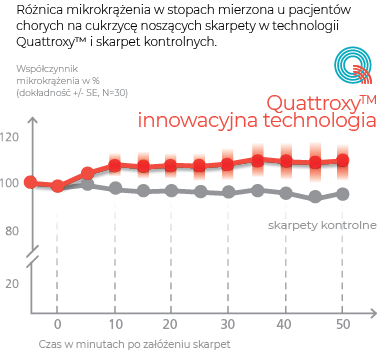
The effect of increasing blood circulation has been confirmed by clinical studies:
Which sock models are most frequently recommended for diabetics?
All models are made from yarn that increases microcirculation and oxygenation. Discover Reflexa models recommended for diabetes, sensitive feet, poor circulation, and other health issues.
- Reflexa Diabetic Thick Socks – warm socks for diabetics, non-binding, with a soft terry cushioned sole underneath that provides a pleasant walking sensation, like walking on a cloud. They are especially recommended for sleeping and for the autumn-winter season. Available in two colors: light beige and black.
- Reflexa Diabetic Thin Socks – thin non-binding socks with an excellent design. The thinner construction of these socks is chosen for everyday wear and is the most popular purchase during the spring-summer period. The socks are available in two colors: beige and black.
- Reflexa Diabetic Knee-Highs – Many customers, experiencing the benefits of Reflexa socks, would pull them up as high as possible to increase circulation up to the knee, which is why we introduced circulation-boosting knee-highs. They feature the same construction as the thick Reflexa Diabetic socks, just longer. Available in three colors: black, navy, and gray.
Non-binding socks by Reflexa are the most popular socks in Europe. They are produced by the Italian manufacturer INTERSOCKS, known for top-quality products and the owner of the CROCS, SALOMON, NORDICA, and HUNTER brands.
Reflexa socks provide the highest level of foot care and are characterized by high durability. The minerals do not wash out of the yarn, and the fibers do not fray even with intensive use.
Take care of your feet. Our health and daily well-being depend on their condition.